Apropos of power tools

Growing up, we didn’t have a lot of power tools and when I was younger, I wasn’t really allowed to use them anyway. With my dad, I learned to use hand tools like screw drivers, hammers, and saws. We built my first tree house with those tools.
As I got older and better at building things - or at least taking them apart to learn how things worked - I got to use more power tools. This was much more efficient.
When I finally started buying my own hand and power tools, that experience - and continued experience with trial and error, and making mistakes – was important to know when hand tools or power tools were more appropriate.
- Power drivers are generally useful, but sometimes too big in tight spaces or provide too much torque.
- Hand sanders make short work of sanding wood, but sandpaper and elbow grease are better for hard wood, or small or complex projects.
- My 11,000 RPM grinder cuts through steel pipe well but would melt PVC pipe so I use a coping saw.
- Cutting long lengths of wood would be a pain without my circular saw and a portable table saw I made complete with a fence and track bars.
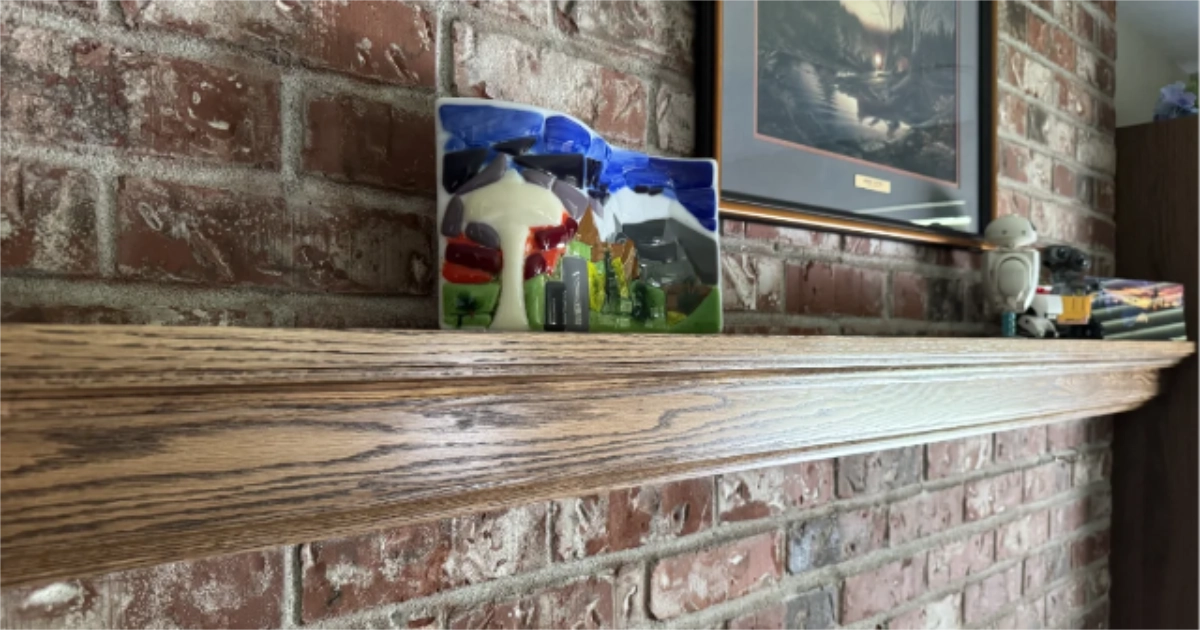
All that experience and knowing when to use the right tool for the right job helped me build an oak fireplace mantel one Christmas for my wife.
Or a step stool for my dog who has a deformity in his front leg causing arthritis.
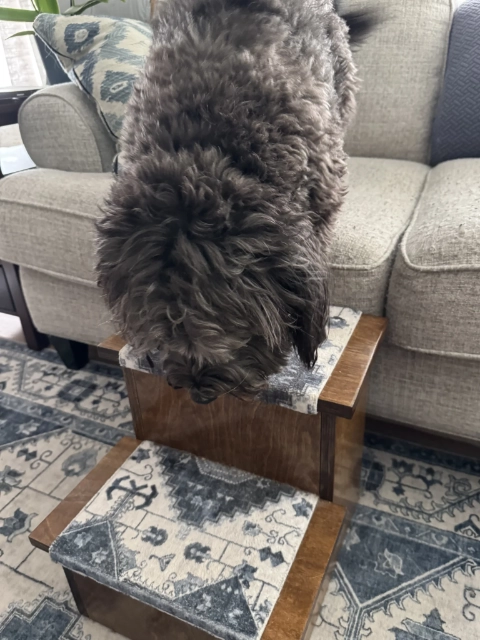
My mom also taught me how to sew. I’ve sewn on patches and fixed many holes in materials by hand, but a sewing machine is invaluable for larger projects like whip stitching the edges of the runner I cut down to size for that step stool.
Experience is important for using any tool, and no tool is perfect for every job. Power tools can often finish tedious tasks more quickly but knowing how to use hand tools is important when needed. All are just as useful in the right situations.